
Arizona Public Records Law
Arizona's open-records framework starts with A.R.S. § 39-121, which says public records and other matters in the custody of any officer are open to inspection during office hours. A.R.S. § 39-121.01 defines public bodies and officers, requires record maintenance, and supports copy requests. A.R.S. § 39-121.03 sets a separate path for use of public records for a commercial purpose.
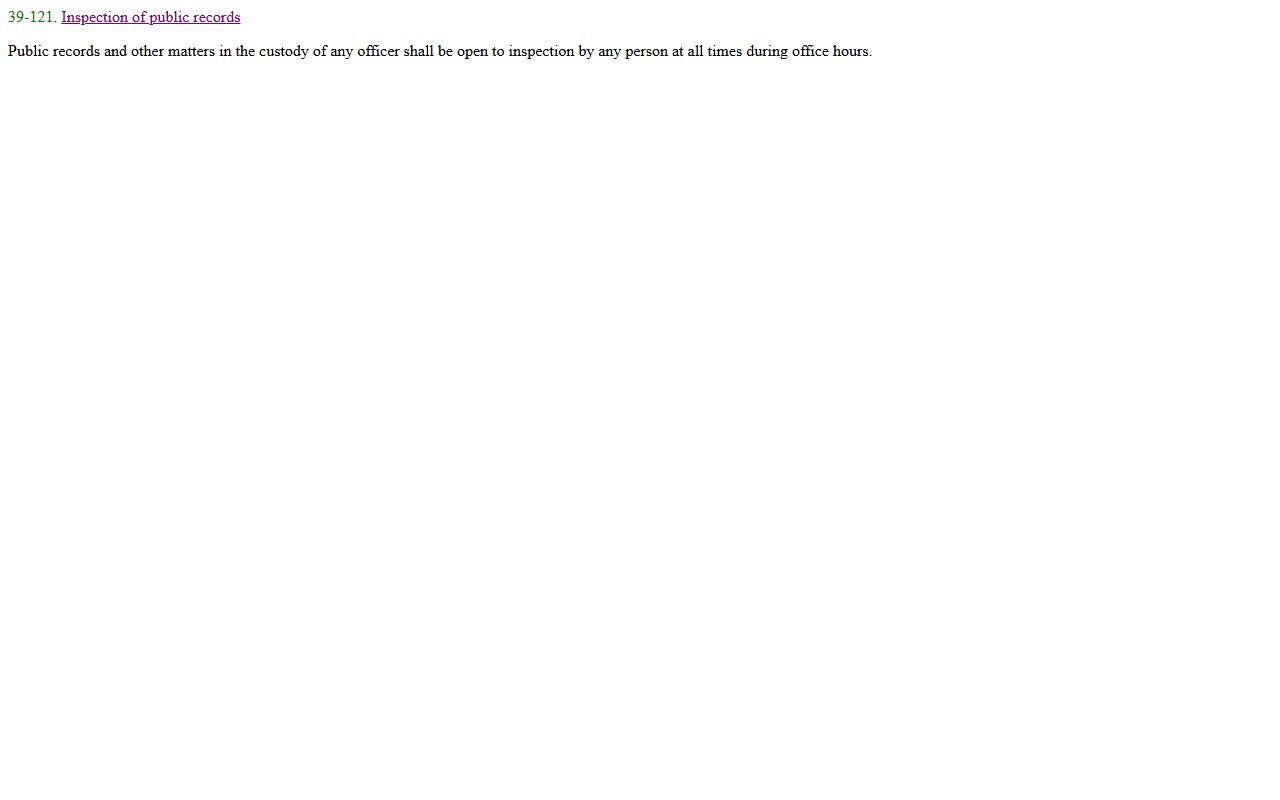
The statute is the legal foundation for a Pima County public records request. It applies to most county and city agencies but does not override court-record rules.
Court records have a parallel framework. Arizona Supreme Court Rule 123 governs access to judicial records. The Pima County Clerk and the Justice Court both cite Rule 123 in their public-records pages. A request to the Clerk for a court file follows Rule 123 plus the Clerk's own copy process.
Court Records vs Agency Records
The Pima County public records process splits along two main lines. Court records sit with the Clerk of the Superior Court or the Pima County Consolidated Justice Court. Agency records sit with the Sheriff, the County Attorney, county departments, and city offices. The right path depends on which office holds the file.
A Pima County criminal case file is a court record. The Clerk handles it. A Sheriff's incident report on the same arrest is an agency record. The Sheriff handles it. A County Attorney charging memo is also an agency record, but it lives with the prosecutor's office. The two systems often overlap, and a researcher should not assume one office speaks for the others.
How to File a Pima County Public Records Request
A clean public records request makes the office's work faster and the answer more useful. The steps below work for most Pima County offices, including the Sheriff and the County Attorney. Court records use a closely related path that adds the court's own copy rules.
- Identify the right custodian: Clerk, Sheriff, County Attorney, county department, or city office.
- Describe the record by date, case number, party name, incident number, or report number.
- State your name, mailing address, phone, and email.
- Include the noncommercial-purpose affirmation, or explain the commercial use, under A.R.S. § 39-121.01 and § 39-121.03.
- Pick a delivery format: in person, email, mail, or phone for some offices.
- Be ready to pay copy and postage fees on delivery.
- Allow time for review and redaction of sensitive items.
The Clerk takes Visa, MasterCard, or Discover by phone for copy requests, including postage and handling. The Sheriff's Forms & Reports page is the right starting point for an incident report.
Pima Records Request Form Field Inventory
Each office uses slightly different intake fields. The set below covers the data most Pima County offices ask for, including the Clerk, the Justice Court, the Sheriff, and the County Attorney.
| Field | Type | Required | Notes |
|---|---|---|---|
| Requester name | Text | Yes | Full legal name. |
| Mailing address | Text | Yes | For mail delivery. |
| Phone | Text | Yes | For call-back on missing data. |
| Text | Yes when available | For email delivery. | |
| Record description | Text | Yes | Case number, party name, date, report number. |
| Purpose of request | Text or checkbox | Yes | Noncommercial or commercial; tied to A.R.S. § 39-121.03. |
| Signature | Signature | Yes | Affirms the purpose. |
| Copy or certified copy | Checkbox | Optional | Drives fee. |
Commercial Purpose Rules
Arizona treats commercial use of public records as a separate category. The Pima County Clerk page says any request for court records must include an affirmation under A.R.S. § 39-121 and § 39-121.01 that the record is not for a commercial purpose, or a statement explaining the commercial use under A.R.S. § 39-121.03.
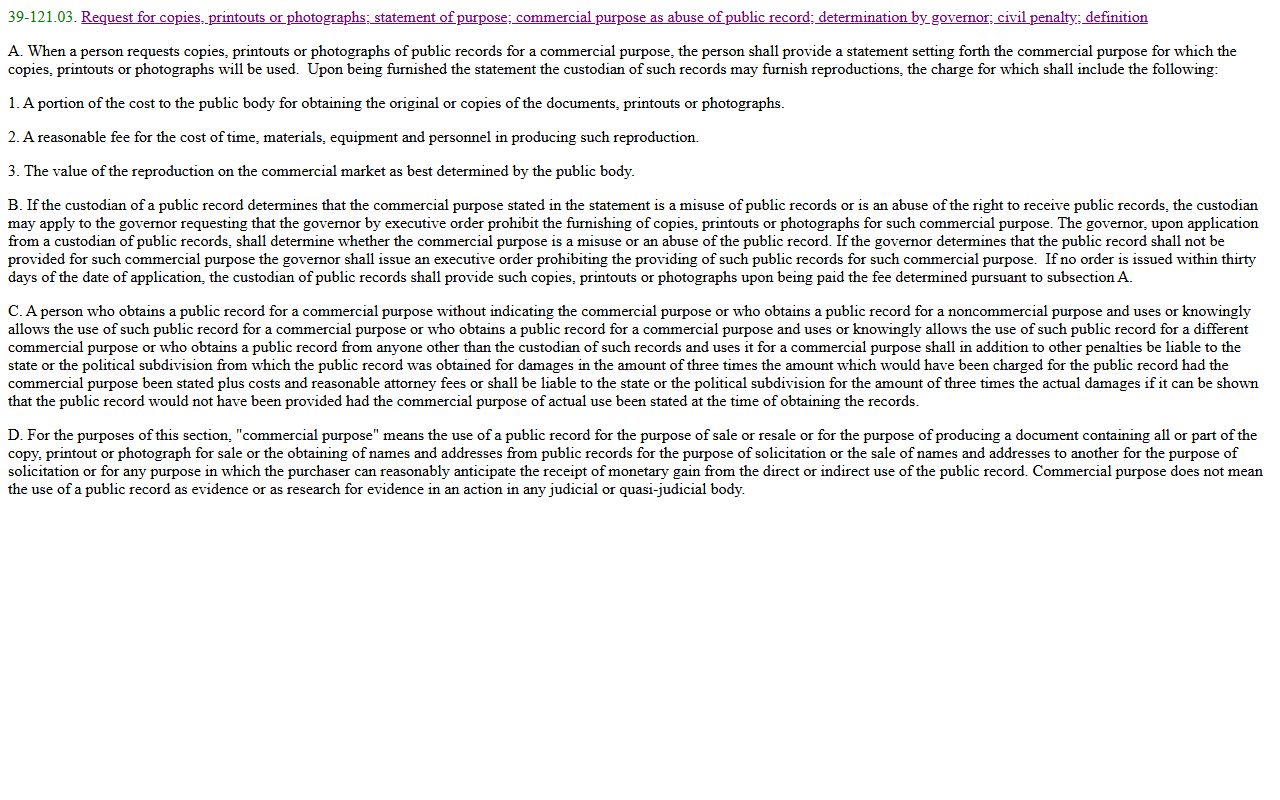
Commercial use can include resale, marketing lists, and other business purposes. Fees for commercial requests can be higher than fees for noncommercial requests. The DPS sex offender list also limits how a downloadable file can be used.
Pima County Sheriff Reports
The Pima County Sheriff's Department handles incident reports for unincorporated Pima County and for any agency the Sheriff serves under contract. The incident report request page sets the intake process. Reports may include redactions for victim information, juvenile names, or open investigations.
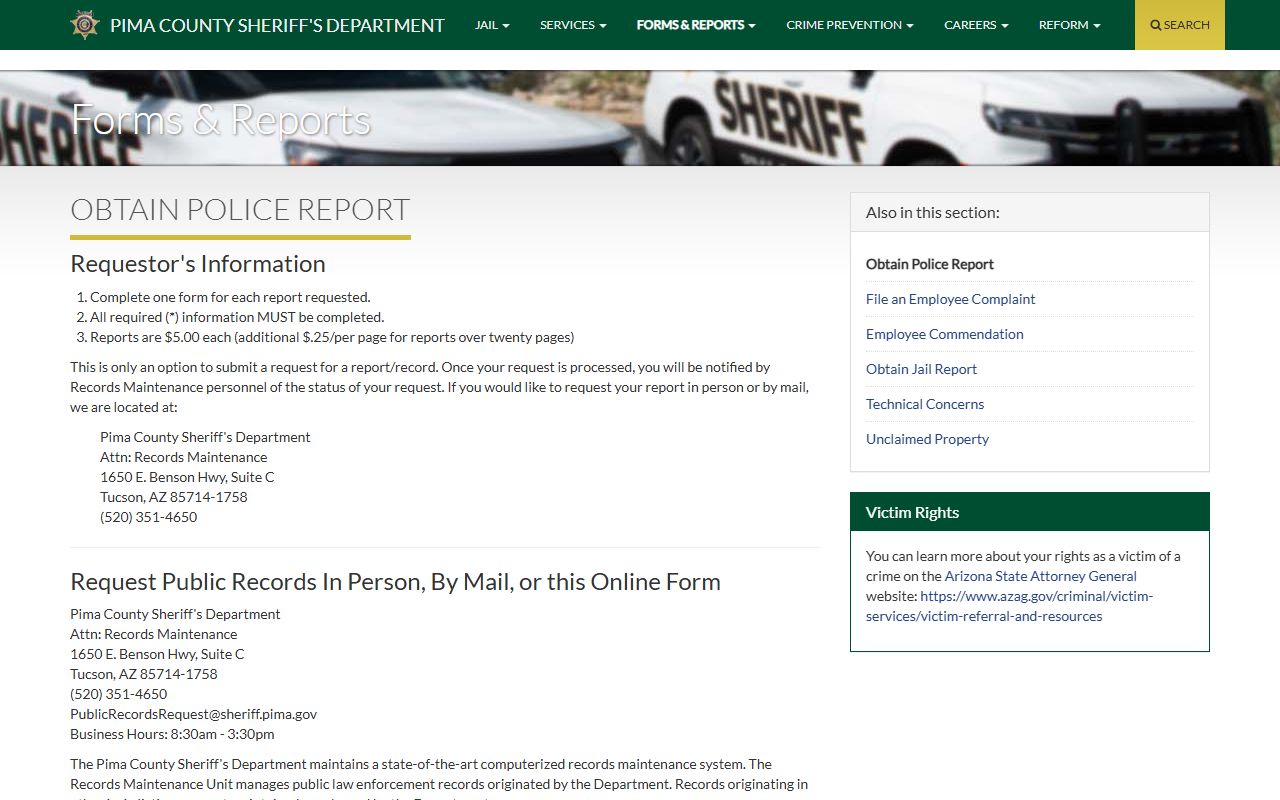
The Sheriff's request page is the right starting point for a Pima County incident report. The Sheriff's headquarters is at 1750 E. Benson Highway, Tucson, AZ 85714. The main line is 520-351-4600. Non-emergency dispatch is 520-351-4900.
Pima County Attorney Records
The Pima County Attorney's Office, led by County Attorney Laura Conover, handles public-records requests under Arizona Public Records Law. The PCAO Civil Division page says PCAO supports the open-records framework, sometimes called Sunshine on Government law, and that records in the office of a public agency are open during office hours.
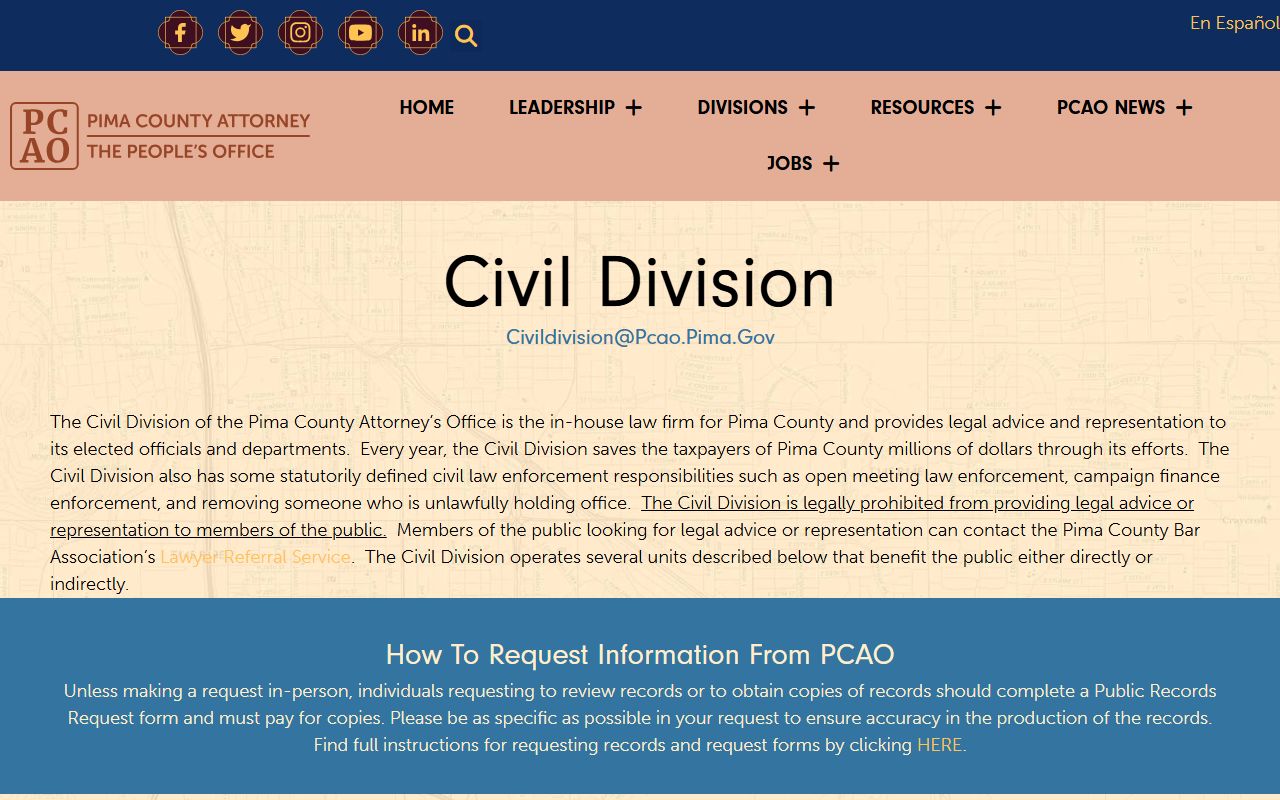
PCAO has a public-records request information document with instructions for requesters. The civil division is the right entry point for most agency-level questions.
Clerk Public Records Services
For Pima County court records, the right office is Public Records Services in Room 241 of the Congress Street complex. The Clerk accepts copy requests by phone, in person, email, mail, or online. The office takes Visa, MasterCard, or Discover by phone for copies and postage and handling.
Public Records Services
110 W Congress St, Room 241
Tucson, AZ 85701-1317
520-724-3240
Mon-Fri 8:00 a.m.-4:30 p.m.
Justice Court Records
240 N Stone Avenue
Tucson, AZ 85701
520-724-3171
JP77 records request form
Justice Court Records Requests
The Pima County Consolidated Justice Court runs its own records request process. The JP77 records request form covers requester identity, party information, purpose, signature, copy or certified copy boxes, and the commercial-purpose certification. The Justice Court's published fees are $0.50 per page for plain copies and $33.00 per certified copy. The court cites Arizona Supreme Court Rule 123 for public access and Rule 29 for record management and retention.
Older Justice Court files may have been destroyed under the retention schedule. A search that fails to find an older case is not always proof that no case existed; it can mean the record was disposed under court rule.
Confidential Pima County Records
Some Pima County public records are not open to inspection. Sealed criminal records under A.R.S. § 13-911, adoption files under A.R.S. § 8-121, juvenile dependency, severance, mental-health files under A.R.S. § 36-509, protected addresses, and victim identifiers are closed by statute or court order. An open-records request for a closed file will be denied with a citation to the relevant statute or rule.
A request denial can be reviewed in court. The Attorney General's Office publishes public-records resources and opinions. The Pima County Attorney's Civil Division handles many county-level review questions.
Pima County Public Records Fees and Timing
Fees and timing vary by custodian. The Clerk uses the official fee schedule, with a new schedule effective June 1, 2026 under Pima County Ordinance 2026-4. The Justice Court charges $0.50 per page for plain copies and $33.00 per certified copy. The Sheriff and PCAO set their own copy fees through agency policy.
Response time depends on file size, redaction work, and where the record sits. A simple court-record copy can move in a day or two. A complex Sheriff or PCAO request can take longer because of legal review. Plan ahead for time-sensitive needs.
Note: Include the noncommercial-purpose affirmation under A.R.S. § 39-121.01 with every Pima County public records request; missing the affirmation can slow or block the response.
City and Town Records in Pima County
Pima County is not the only public-records custodian inside the county. Tucson, Marana, Oro Valley, Sahuarita, and South Tucson each run their own city clerk's office, police department, and municipal court. City public-records requests for police reports, citations, and city-council records go to the city, not to the county. The county's open-records framework still applies, but the right desk is at city hall.